
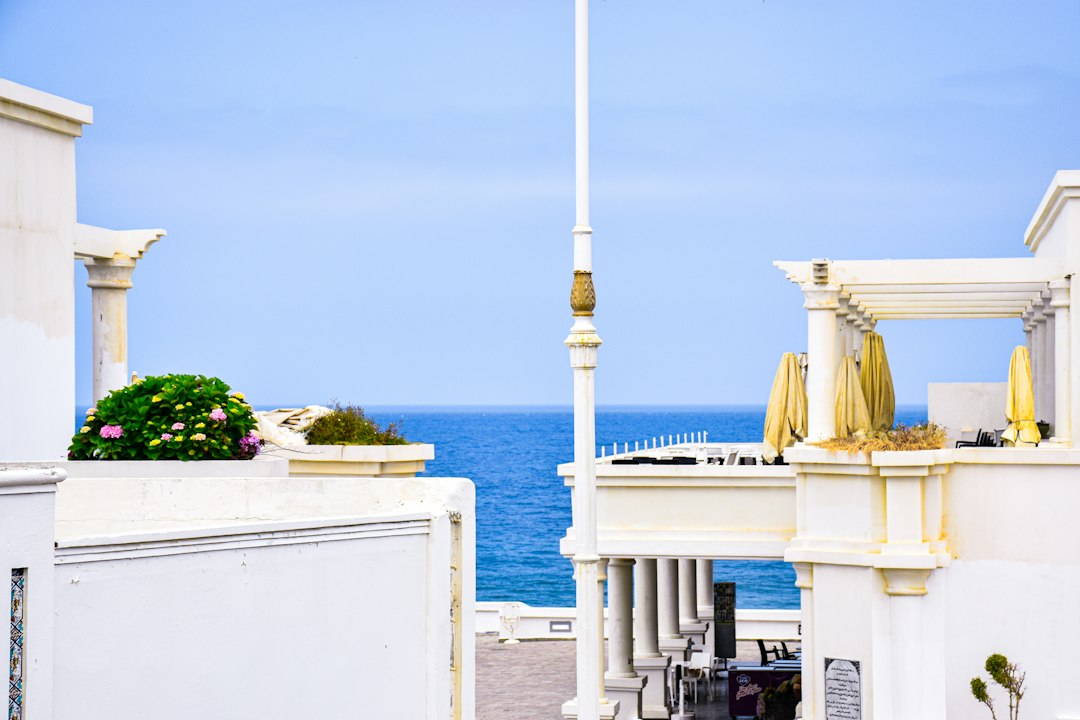
Luxury penthouses in Tangier are attracting international buyers because they deliver Mediterranean living at 40–60% less than comparable Spanish or Portuguese properties, offer commanding sea and strait views, include modern finishes and amenities, and generate strong short-term rental income from tourists. The combination of legal property ownership for foreigners, improving infrastructure, and emerging lifestyle appeal has made Tangier's top-floor units a serious wealth-preservation and income-generation vehicle for European and Middle Eastern investors seeking real estate diversification outside their home markets.
What Makes Tangier's Luxury Penthouse Market Unique
Tangier sits at a unique intersection of geography, affordability, and lifestyle. The city is just 14 kilometers across the Strait of Gibraltar from Spain, yet property prices remain a fraction of southern European coastal markets. A luxury penthouse with sea views and premium finishes that would cost €1.2 million in Barcelona sells for €400,000–€650,000 in Tangier's most prestigious neighborhoods.
This price differential isn't new, but the profile of buyers has shifted. Until five years ago, Tangier's luxury market was dominated by wealthy Moroccan nationals and Gulf investors seeking weekend retreats. Today, European retirees, British entrepreneurs, French art collectors, and Scandinavian wealth managers are purchasing penthouses as primary residences, rental investments, or diversification assets outside eurozone real estate.
The Core Appeal: Location, Views, and Walkable Neighborhoods
The neighborhoods attracting international penthouse buyers share three non-negotiable features: unobstructed sea or strait views, walking distance to restaurants and services, and access to modern apartment buildings with professional property management. The most sought-after addresses include:
- <a href="/area/malabata">Malabata</a> — Tangier's primary beachfront district, with direct Mediterranean access and the emerging marina complex.
- <a href="/area/mershan">Mershan (Quartier de Mershan)</a> — Historic upscale quarter just above the Kasbah, known for established penthouses with unobstructed views and tree-lined avenues.
- <a href="/area/ghandouri">Ghandouri</a> — An emerging luxury corridor favored for larger-format units and modern high-rise developments.
- <a href="/area/malabata-hills">Malabata Hills</a> — Elevated hillside development offering panoramic views with modern amenities and family-oriented layouts.
- <a href="/area/achakar">Achakar</a> — Tangier's exclusive northwestern coastline, stretching toward Cap Spartel, long favored for private villas and premium residential enclaves.
International buyers consistently rank sea views and neighborhood walkability above size. A 120 m² penthouse with a south-facing terrace and access to cafés and shops commands significantly more than a 150 m² unit in an inland district with limited pedestrian activity.
Price Positioning in a Global Context
Understanding penthouse pricing requires comparing Tangier not to rural or suburban markets, but to other Mediterranean coastal cities with similar amenities and lifestyle appeal.
In coastal Spain (Málaga, Marbella), a luxury penthouse with sea views and modern finishes ranges from €800,000 to €2 million. In Portugal's Cascais or Lisbon's Alcântara, similar units sell for €700,000 to €1.5 million. In Tangier, the equivalent property—new construction, premium finishes, sea views, modern building—ranges from €350,000 to €700,000, depending on exact location and amenities.
This 40–60% cost advantage is the primary driver of demand. For a European buyer seeking a second home or a retiree relocating on a fixed income, the price differential is transformative. A €500,000 budget buys a modest one-bedroom apartment in Barcelona or a mid-level penthouse in Tangier.
Rental Income Potential: Why Investors Are Taking Notice
Luxury penthouses in Tangier's established neighborhoods generate strong rental yields for furnished short-term lettings. International tourists visiting Tangier, Gibraltar, and the Rif region book high-end Airbnb units at €100–€180 per night during peak seasons (April–October) and €60–€100 during shoulder months.
A penthouse renting 180 nights per year at an average €120 per night generates €21,600 in gross annual revenue. After property management fees (typically 20–25%), utilities, and maintenance reserves, net annual returns approach 6–8% on purchase price—a yield comparable to European long-term rentals but with significantly lower capital outlay.
Several large developers now explicitly market penthouses to international buy-to-let investors with turnkey rental management partnerships. Immoworld's developer partners increasingly include furnished rental management in their post-handover services, reducing buyer friction for foreign investors unfamiliar with Moroccan hospitality logistics.
Legal Clarity: Foreign Ownership and Peace of Mind
Morocco's property laws explicitly permit foreign nationals to purchase residential real estate outright. This legal clarity—rare in North Africa—removes a major psychological barrier to international investment. Foreign buyers can acquire full title (not a lease), pass property to heirs under Moroccan succession law, and legally rent units to tourists without special permits.
The purchase process is governed by Morocco's notary system. A government-appointed notary authenticates the seller's ownership, conducts title searches, collects transfer taxes, and oversees escrow for off-plan purchases. For international buyers unfamiliar with Moroccan legal procedures, Immoworld's FAQ section addresses common concerns about the purchase timeline, costs, and foreign buyer protections. Understanding notary fees and closing costs is essential—the notary fees calculator helps buyers budget accurately before committing to purchase.
Modern Amenities and Construction Standards
Penthouses in Tangier's newer developments feature amenities increasingly expected by international luxury buyers: private terraces (often 40–60 m²), modern kitchens with integrated appliances, marble or high-quality tile finishes, underfloor heating, smart home automation, private parking, and 24-hour security.
Building-level amenities in premium developments include rooftop pools, gyms, concierge services, and dedicated staff. These features were rare in Tangier a decade ago; today, they are standard in properties targeting international buyers. Developers understand that European and Gulf investors are comparing Tangier not to budget Moroccan markets, but to mid-range Mediterranean developments in Spain and Portugal.
Currency Advantage and Investment Timing
The Moroccan dirham is pegged to a basket of currencies (primarily the euro and US dollar) and fluctuates within a narrow band. For European buyers, this currency stability is attractive—unlike emerging markets with volatile currencies, a penthouse purchase in dirhams is largely hedged against currency collapse or sudden devaluation.
Additionally, property in Tangier offers geographical and regulatory diversification. A buyer with significant real estate holdings in France, the UK, or Spain views a Tangier penthouse as a non-correlated asset in a different regulatory jurisdiction, reducing exposure to European real estate cycles or tax policy changes.
The Emerging Lifestyle Appeal
Tangier has undergone significant urban renewal over the past decade. New waterfront developments, restored medina quarters, improved restaurants and cultural venues, and upgraded infrastructure have reshaped the city's global image. International lifestyle publications increasingly feature Tangier as an underrated Mediterranean destination combining authentic cultural experience, Mediterranean climate, and affordability.
This soft-power shift matters to penthouse buyers. A decade ago, international buyers purchasing in Tangier were primarily wealth-maximizers seeking ROI. Today, many are actively choosing Tangier as a preferred living destination—relocating from northern Europe for retirement, establishing businesses in Tangier's growing creative sectors, or seeking a Mediterranean second home for frequent leisure use.
How to Get Started: Next Steps for International Buyers
International buyers interested in luxury penthouses should begin by clarifying their investment thesis: primary residence, holiday home, or pure income investment. This decision shapes neighborhood preference, amenity priorities, and financing approach.
Second, review Immoworld's current penthouse inventory across established neighborhoods, paying attention to builder reputation, exact finishes, and proximity to lifestyle amenities you prioritize. Third, connect with Immoworld's advisory team—contact Immoworld to schedule a property viewing, neighborhood tour, or legal consultation with a notary partner familiar with foreign buyer acquisitions.
For off-plan penthouses, review the developer's track record and understand Morocco's VEFA (Vente en l'État Futur d'Achèvement) framework, which protects off-plan buyers through structured payment schedules and legal escrow. Budget 8–10% of purchase price for notary fees, transfer taxes, and registration costs, then secure pre-approval for international fund transfer if financing from outside Morocco.
Why Now Is the Right Time
Tangier's penthouse market remains early-stage relative to established Mediterranean luxury markets. Inventory is limited, new high-quality developments are launching steadily, and international buyer awareness is growing but far from saturated. Prices have risen 8–12% annually for premium units in the past three years, yet remain significantly cheaper than comparable properties in Spain, Portugal, or southern France.
For international buyers seeking Mediterranean lifestyle, strong rental potential, legal clarity, and genuine price advantage, Tangier's luxury penthouse market offers a rare combination. The city is no longer a speculative investment destination—it has become a genuine lifestyle choice for discerning buyers willing to embrace a vibrant, culturally rich, and affordably luxurious Mediterranean alternative.