
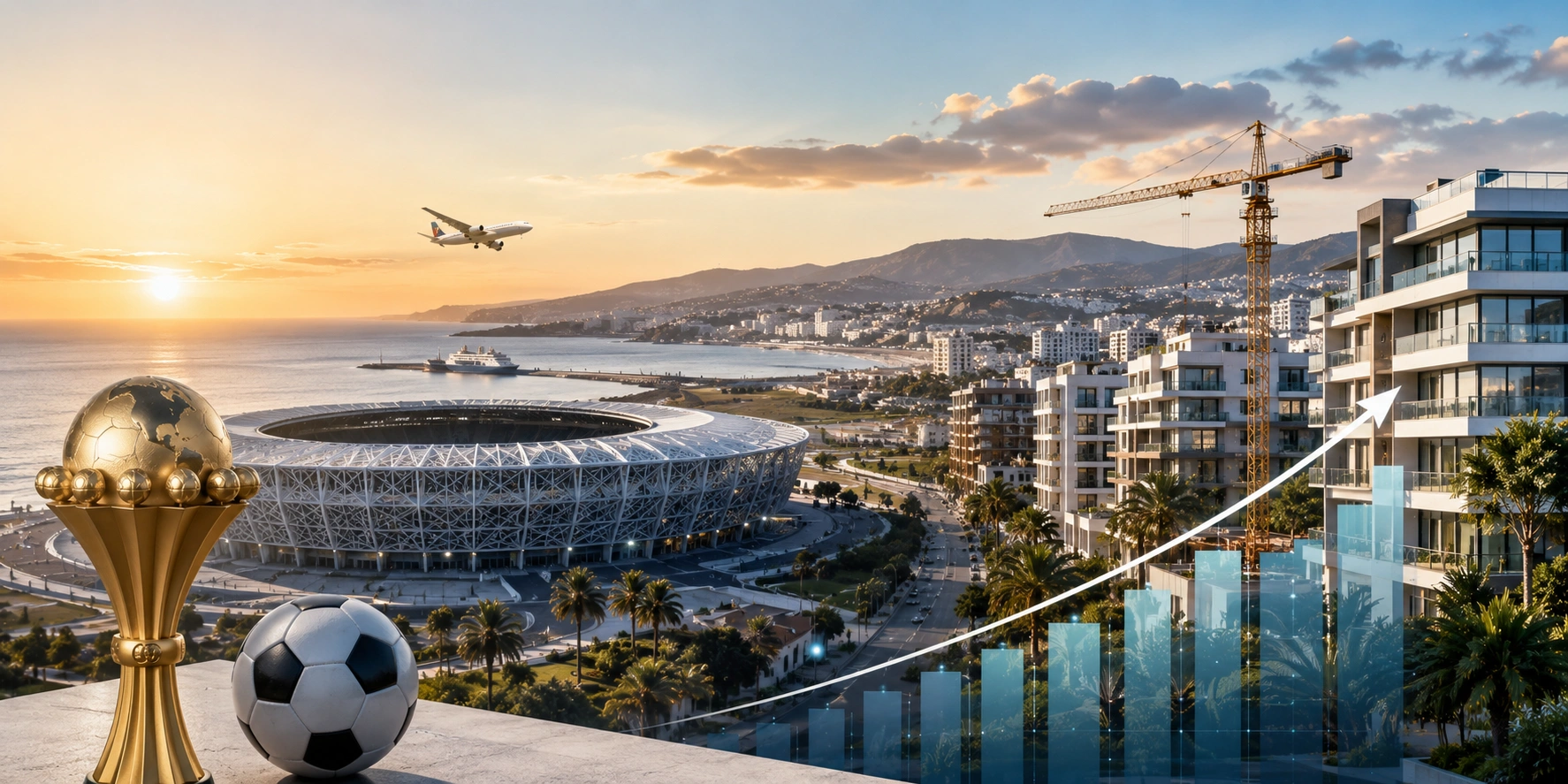
CAN 2025: Why Morocco’s real estate market is the next major investment frontier
The 2025 Africa Cup of Nations (AFCON) is far more than just a football tournament; it is a $16 billion catalyst that is fundamentally reshaping North Africa’s economic landscape. Scheduled from December 21, 2025 to January 18, 2026, the event serves as a high-profile “dress rehearsal” for the 2030 FIFA World Cup. For real estate investors, this dual-hosting timeline has opened a unique window of opportunity, particularly in host cities like Tangier, where infrastructure and tourism are reaching record levels.
The connectivity revolution: more than 660 additional flights
The surge in interest is driven by an unprecedented expansion of air transport. Royal Air Maroc (RAM), the official CAF partner, has deployed an exceptional transport plan:
More than 660 additional flights: A massive deployment to handle the influx of fans and professionals.
50% increase in capacity: RAM is increasing its seating capacity by more than 50% across its entire network.
Global reach: Direct seat capacity has doubled for qualified nations such as Senegal, Côte d’Ivoire, and Egypt, alongside an increase in flight frequencies from major European hubs like Paris, Madrid, and London.
This logistical push is expected to transport at least 500,000 fans via the national airline alone, generating nearly 1.5 billion MAD in additional revenue for the aviation sector.
A tourism boom: 1 million foreign visitors
Morocco is preparing for a monumental surge in tourism that is already impacting the hotel sector. Estimates suggest a range of between 500,000 and 1 million additional foreign visitors during the tournament cycle.
Overnight stays: At the national level, overnight stays increased by 11% during the first three quarters of 2025, reaching 23.58 million.
Economic impact: The presence of foreign supporters is expected to generate between 4.5 billion and 12 billion MAD in spending on accommodation, food services, and transportation.
Targeted growth: The average daily spending per supporter is estimated between 600 and 800 MAD, with an average length of stay of ten nights.
Focus on Tangier: The “surprise winner” of 2025
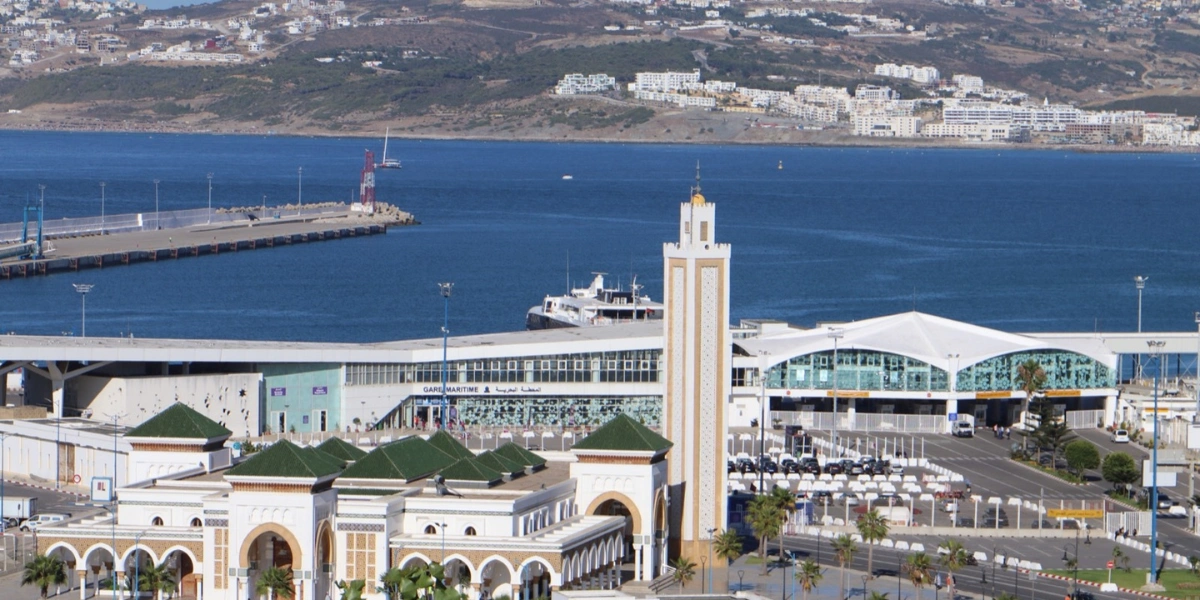
While Marrakech and Casablanca remain safe values, Tangier has established itself as the most dynamic real estate market in the country. Strategically located at the crossroads of Europe and Africa, Tangier is undergoing a transformation driven by the Grand Ibn Batouta Stadium, the largest venue in Morocco with a capacity of 75,000 seats.
Real estate performance indicators in Tangier (2025)
| Indicator | 2025 Status | Context |
| Rental yield | 8,00 % | The highest average yield in Morocco. |
| Luxury real estate prices | $3,400 per m² | Driven by coastal appeal and interest from Gulf countries. |
| Land price growth | +4.3% (Q3) | Significant appreciation near the port and stadium. |
| Transaction volume | +19.4% (year-on-year) | Reflects growing interest in beachfront villa complexes. |
In premium neighborhoods such as Malabata and Iberia, residential prices have seen localized increases of 15 to 20%, directly driven by preparations for AFCON and the expansion of the high-speed rail line (TGV).
The “gold rush” of Airbnb and hotels
The accommodation sector is experiencing a historic imbalance between supply and demand. Short-term rentals via platforms such as Airbnb and Booking.com have become the preferred choice for visitors seeking privacy and style.
Airbnb demand in Tangier: There are currently more than 2,676 active listings in Tangier, with an average daily rate (ADR) of $97. High-end properties (top 10%) charge rates above $165 per night.
Occupancy peaks: In Tangier, overnight stays in classified tourist accommodation increased by 16% by the end of September 2025, reaching 1.55 million.
The “Marrakech factor”: By comparison, occupancy in Marrakech reached 76% in May 2025, with top properties generating more than $1,777 per month. Tangier is following a similar trajectory as the tournament approaches.
The regulatory reforms, such as Law 80-14, have strengthened investor confidence by simplifying the short-term rental process and ensuring legal security for property owners.
What investors should remember: Why act now?
The combination of a 55% growth in foreign direct investment (FDI) and upcoming infrastructure upgrades makes 2025 a pivotal entry point. With the 2030 World Cup on the horizon, properties purchased today in Tangier, Rabat, and Marrakech are not just seasonal assets, but foundational elements of Morocco’s long-term urban transformation.
Ready to capitalize on Morocco’s real estate boom? Focus on turnkey apartments in downtown Tangier or luxury villas in Malabata to capture maximum rental yields from the millions of fans arriving for AFCON 2025.
 EN
EN  FR
FR  NL
NL  AR
AR 