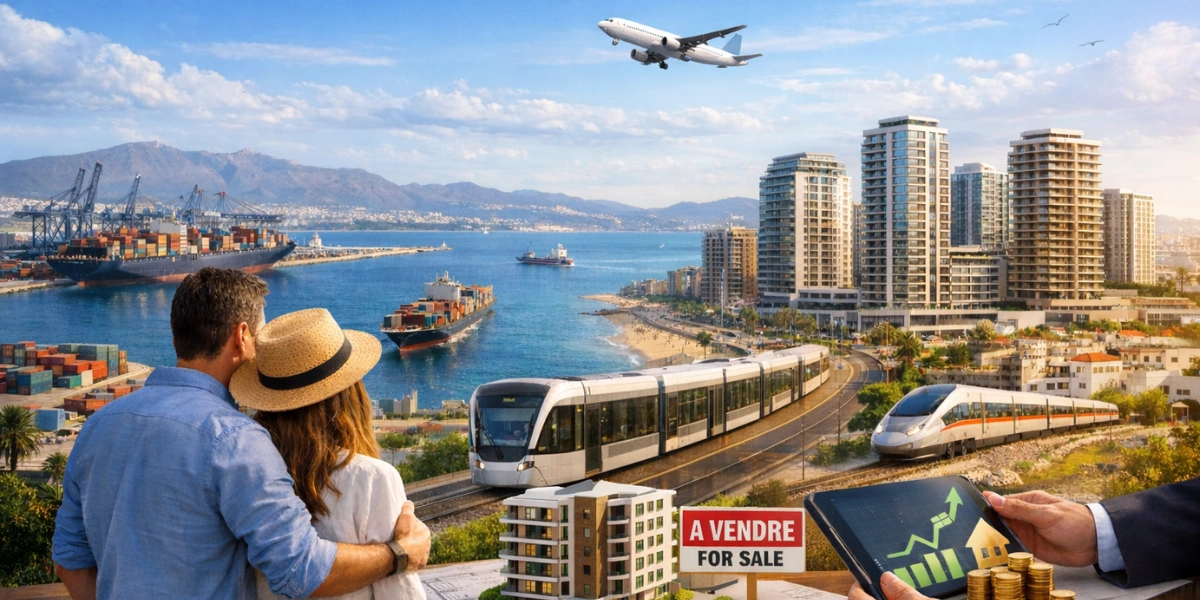
Is 2026 the perfect year to invest in real estate in Tangier?

Is 2026 the perfect year to invest in real estate in Tangier?

Tangier is buzzing with energy. The city is attracting more and more Moroccan and international investors thanks to its rapid growth, major urban projects, and strategic position between Europe and Africa. In 2026, Tangier’s real estate market looks more promising than ever. But what makes this city so attractive today? Let’s explore the main reasons to invest in real estate in Tangier.

A strong economy supporting the real estate market

First of all, Morocco’s economy continues to grow, and Tangier directly benefits from this momentum. Thanks to the Tanger Med port, industrial zones, and the arrival of major international companies, the region creates thousands of jobs each year. This economic activity attracts a growing workforce, which naturally increases the demand for homes for sale and for rent.

This economic stability reassures investors and lays a solid foundation for a continuous rise in real estate prices in Tangier.

Urban projects that are transforming the city

In addition to its economic strength, Tangier is undergoing an impressive urban transformation. New roads, airport modernization, improved transportation, and the redevelopment of entire neighborhoods are changing the city’s landscape. Upcoming major sporting events have also accelerated public investments, boosting the value of many residential areas.

These projects make the city more modern, more accessible, and more enjoyable to live in — three essential criteria for a successful real estate investment in 2026.

Rapidly growing tourism

Next, it’s impossible to talk about Tangier without mentioning its tourist appeal. The city attracts visitors with its beaches, corniche, historic medina, and proximity to Spain. Every year, the number of visitors increases, creating strong demand for vacation rentals and furnished residences.

For investors, this means excellent rental yield opportunities, especially in neighborhoods close to the city center, the sea, or the TGV station.

Affordable prices with strong potential

Despite its rapid development, Tangier remains more affordable than many major international cities. You can still find apartments at competitive prices, especially in rapidly growing neighborhoods. At the same time, rents continue to rise, allowing for attractive returns.

This combination — reasonable purchase prices and strong rental demand — makes Tangier an excellent choice for those looking to invest in real estate in Morocco.

A favorable environment for investors

Another important point is Morocco’s open policy towards foreign investors. Buying property is simple, secure, and well-regulated by law. In addition, certain areas benefit from tax advantages and investment incentives, encouraging the development of modern, high-quality projects.

All of this strengthens confidence in Tangier’s real estate market for the years to come.

A unique strategic location

Finally, Tangier’s location is one of its greatest assets. Situated just a few kilometers from Europe, connected by the TGV line to major Moroccan cities, and home to one of Africa’s largest ports, the city is a true international crossroads.

This exceptional connectivity attracts businesses, tourists, and new residents, which sustainably supports the value of real estate.

Conclusion: Should you invest in real estate in Tangier in 2026?

In summary, Tangier ticks all the boxes: economic growth, major urban projects, booming tourism, still-affordable prices, and a strategic location. In 2026, the city’s real estate market offers real opportunities for investors seeking security and profitability.

Whether you are a local or foreign investor, buying property in Tangier today could be one of the best real estate choices in Morocco. The city is moving fast… and those who invest early are often the ones who benefit the most.
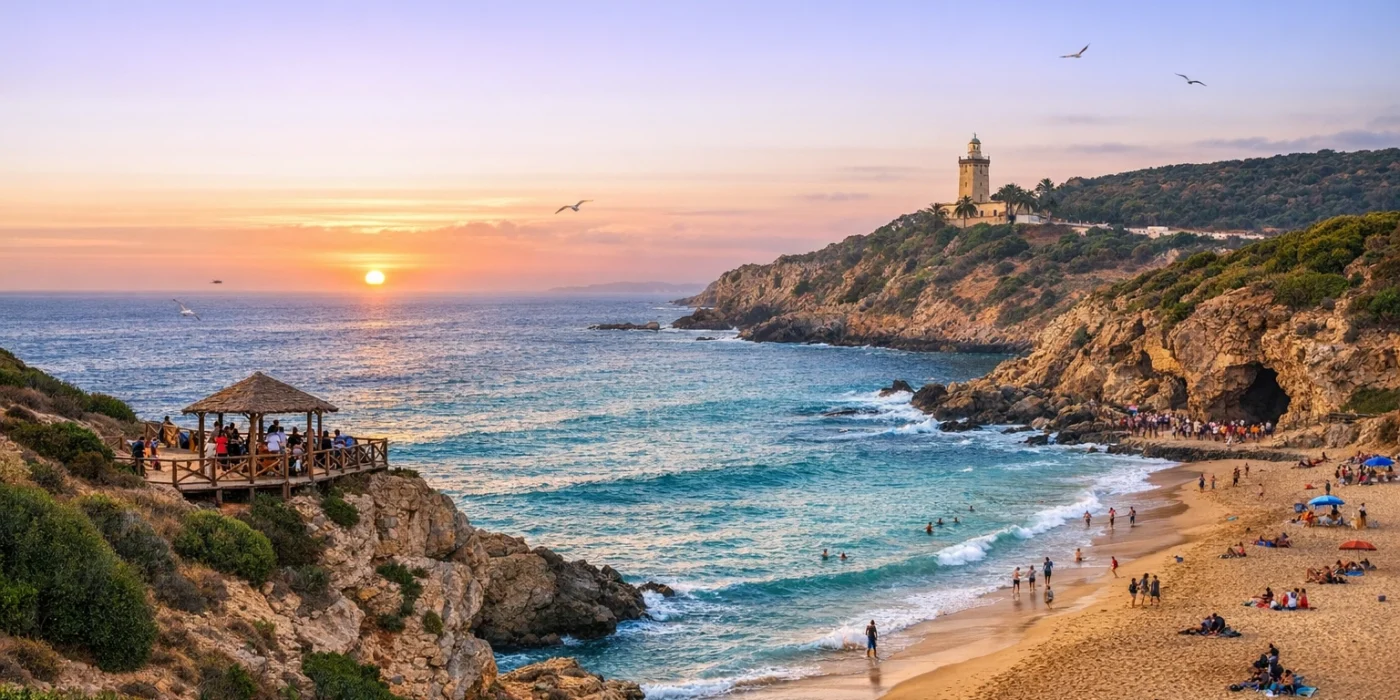
Explore Achakar, Tangier: A Complete Guide to Nature and Leisure

Explore Achakar, Tangier: A Complete Guide to Nature and Leisure

If you’re looking for a place where golden sands meet ancient history, look no further than Achakar. Located at the northwestern tip of Morocco, just a few minutes’ drive from the bustle of Tangier, this coastal gem is the unique spot where the powerful waters of the Atlantic meet the Mediterranean. Whether you’re an adventure seeker, a history enthusiast, or simply looking for the perfect sunset, Achakar offers a peaceful escape away from the urban hustle.

The Golden Shores of Achakar Beach

Achakar Beach, often nicknamed the "Sun Beach," is famous for its three kilometers of fine sand and crystal-clear turquoise waters. Unlike the busier beaches in central Tangier, Achakar offers a much wilder and more relaxing atmosphere. It is a favorite spot for families as the gentle slope into the water makes swimming safe and enjoyable.

For thrill-seekers, the beach is famous for its consistent waves, providing ideal conditions for surfing, bodyboarding, and kitesurfing. If you prefer to stay dry, don’t miss the iconic camel rides along the shore. There’s something truly magical about riding on the sand while the sky turns shades of orange and purple over the Atlantic.

Myth and Mystery: The Hercules Caves

Just steps from the beach lies one of Morocco’s most famous sites: the Hercules Caves. According to local legend, the mythical hero Hercules rested in these caves after completing his twelve labors, including the separation of the continents of Africa and Europe.

The highlight of the visit is the "Window to the Sea," a natural opening in the cave wall overlooking the ocean. Remarkably, this opening is shaped exactly like the map of Africa. At sunset, light passes through this window, filling the cave with an incredible golden glow, perfect for photographers. The caves are easy to explore thanks to lit pathways, but it is recommended to wear comfortable shoes as the ground can be slippery.

Where Two Seas Meet: Cape Spartel

A trip to Achakar wouldn’t be complete without a visit to Cape Spartel, the spectacular promontory marking the exact point where the Atlantic and Mediterranean meet. Here you’ll find the Cape Spartel Lighthouse, built in 1864, which is the oldest lighthouse in Morocco.

From the lighthouse gardens, you can enjoy a 360-degree view of the coast, and on clear days, you can even see the Spanish shores. It’s an ideal spot for a peaceful walk or a picnic. For the more active, a beautiful 8-kilometer coastal trail connects Cape Spartel directly to Achakar Beach, offering breathtaking views of hidden coves and rugged cliffs.

The Green Lungs: Perdicaris Park and Rmilat Forest

If you need a break from the sun and salt, head inland to Perdicaris Park, also known as Rmilat. This lush forest is often called the "lungs" of Tangier.

Today, it is a protected natural reserve filled with pine and eucalyptus trees, offering plenty of shade even in the middle of summer. The park features a network of well-maintained trails, perfect for hiking or a family stroll. While walking, you will discover several viewpoints offering a different perspective on the Strait of Gibraltar and the surrounding greenery.

Gastronomy and Practical Tips

All this exploring is sure to work up an appetite! The Achakar region is famous for its fresh seafood. You can enjoy a traditional fish tajine or grilled fish at local seaside cafés, or for a more upscale experience, visit the restaurant Le Mirage overlooking the beach. Don’t forget to try the local mint tea to perfectly end your day.

Getting There

  • By Taxi: A 20-minute ride from downtown Tangier costs between 50 and 70 MAD.

  • By Bus: You can take a bus from the bus station for around 10–20 MAD.

  • Best Time to Visit: Spring (March to May) and autumn (September to November) offer the best weather for outdoor activities without the summer crowds.

Achakar truly offers the best of Tangier’s natural beauty. Whether you explore ancient caves, hike through coastal forests, or simply relax on the sand, this unique corner of Morocco is a destination that will stay in your heart.

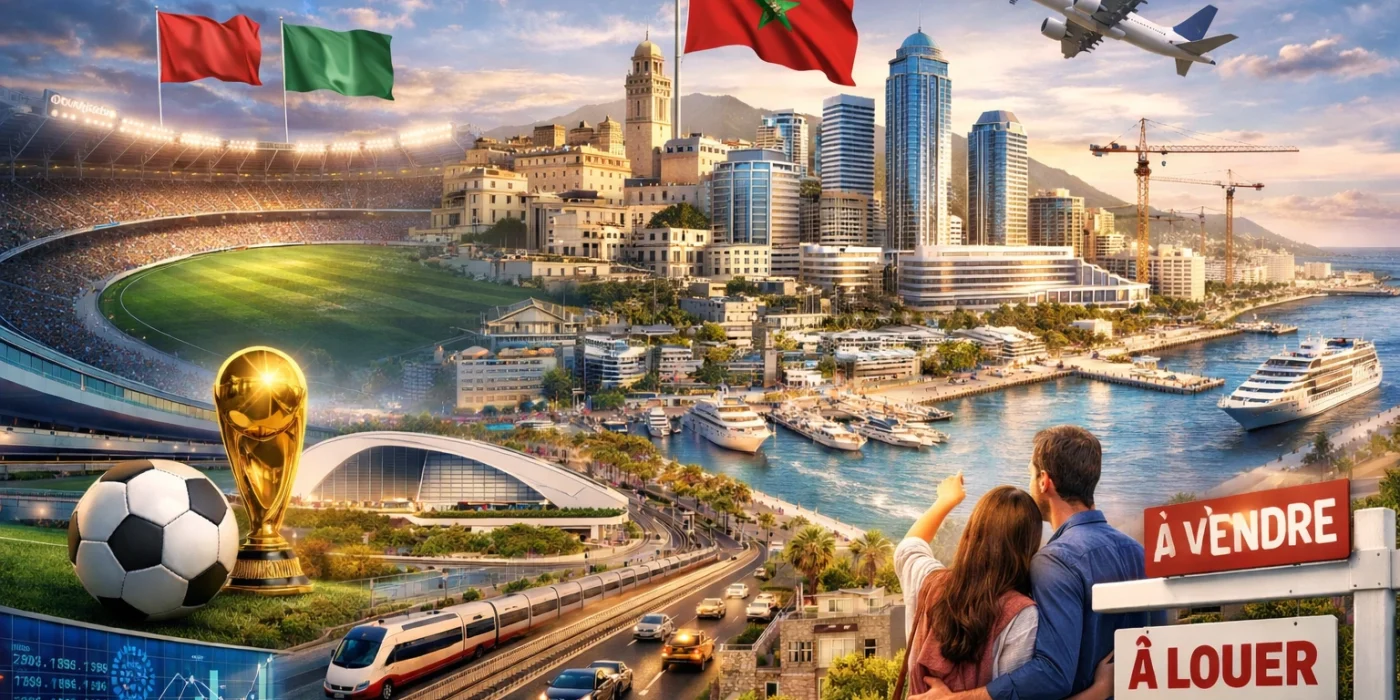
Tangier, future capital of sport and the economy? Morocco’s gains between CAN 2025 and the 2030 World Cup

Tangier, future capital of sport and the economy? Morocco’s gains between CAN 2025 and the 2030 World Cup

Morocco’s hosting of major international sporting events marks a historic turning point in the country’s overall national development process. Sport is no longer just a form of entertainment, but a strategic lever aimed at reshaping infrastructure, strengthening the Kingdom’s international positioning, and propelling the national economy toward unprecedented levels of growth. The current success of Morocco in preparing for the Africa Cup of Nations (CAN 2025) represents a true “full-scale test” before reaching the ultimate goal: co-hosting the 2030 World Cup alongside Spain and Portugal. This strategy goes beyond stadium renovations and includes a radical modernization of transport, digital infrastructure, tourism services, and security. This has had a direct impact on the real estate sector, particularly in Tangier, which is experiencing exceptional pressure on rental and sales markets due to the massive influx of investments and foreign executives.

Economic drivers and tourism challenges of CAN 2025

CAN 2025 acts as an immediate economic accelerator. Initial estimates project additional revenues of around 12 billion dirhams, driven by the expected arrival of approximately one million visitors. This massive human influx, including supporters, journalists, and sponsors, creates strong momentum within the economic fabric, boosting revenues in vital sectors such as hospitality, restaurants, transport, and local commerce.

Hosting this event places Morocco in the global media spotlight, strengthening its image as a top tourist destination. In 2025, the country already recorded record figures with nearly 20 million international tourists, representing a 14% increase compared to the previous year, thanks to the 2023–2026 tourism roadmap.

Tourism and economic indicatorRecorded/forecasted value in 2025Target for 2030
Number of tourist arrivals

20 million tourists

26 million tourists

Direct financial revenues from CAN

12 billion MAD

Total tourism revenues

124 billion MAD (end of Nov. 2025)

120 billion MAD (sustainable annual revenues)

Job opportunities related to the World Cup

Thousands of direct and indirect jobs

Beyond the direct financial impact, CAN supports the emergence of small and medium-sized enterprises (SMEs) by giving them access to public markets related to equipment and services, ensuring sustainable growth beyond the competition.   

Tangier at the heart of change: Infrastructure and urban revival

The city of Tangier is undergoing a radical transformation to become an international hub capable of accommodating millions of tourists and supporters. The preparations for 2025 and 2030 include a series of major projects that are redefining the city’s urban landscape.

Transport revolution and logistics connectivity

To support the expected influx, major projects are currently underway:

  • Development of Tangier Ibn Battouta Airport: A budget of over 3.27 billion dirhams has been allocated for its expansion and the construction of a new terminal, aiming for a capacity of more than 7 million passengers per year.

  • Tangier Tramway Project: This strategic project plans a network of three lines spanning 25 to 30 km, with an estimated cost of 8.4 billion dirhams.

  • Expansion of the road network and tunnels: Construction of underground tunnels to ease traffic near the Sports City, extension of Moulay Rachid Avenue, and a highway project connecting Tangier to Tetouan to strengthen regional integration.

  • Cable Car Project: Technical studies are underway for a cable transport system capable of carrying 2,000 passengers per hour, connecting the port to the medina.

The real estate boom in Tangier: Analysis of the rental and sales market

The preparation for these sporting events, combined with the influx of industrial investments such as the “Tangier Tech” project and free zones, has created unprecedented pressure on the real estate market. Tangier is now experiencing a true “real estate gold rush,” with soaring prices creating huge investment opportunities.

High rental demand: From family housing to tourism investment

The rental market in Tangier is experiencing what can be described as a "crazy" increase, with available housing no longer sufficient to meet demand. This surge results from several factors:

  1. Influx of foreign executives: The massive arrival of foreign engineers and experts, particularly from China for industrial projects, has increased pressure on luxury housing and long-term leases.

  2. Short-term rental phenomenon (Airbnb): Many property owners are turning to digital platforms to rent to tourists and supporters, offering returns far higher than traditional monthly rentals, which reduces availability for permanent residents.

  3. Sports and logistics construction sites: The constant need to house thousands of workers for stadium and road projects maintains sustained demand in areas that were once peripheral.

Rental prices in popular neighborhoods have risen from 1,500 MAD to over 3,000 MAD, while it has become very difficult to find an apartment in the city center for less than 2,200 MAD.

Evolution of sales prices and 2030 outlook

Real estate prices in Tangier rose by 5% to 8% in 2024, and this trend is expected to accelerate in 2025, reaching 10% in some strategic neighborhoods. Real estate investment in Tangier is currently considered one of the safest and most profitable in Morocco, thanks to modern infrastructure and the high-speed train (TGV) connection.

Leveraging the CAN experience to prepare for the 2030 World Cup

Hosting CAN 2025 represents a comprehensive test for Morocco to assess the readiness of all sectors for the world’s biggest event in 2030.   

Security and international cooperation: The testimony of the FBI

One of the most remarkable signs of Morocco’s success is the international interest in its security model. In January 2026, Morocco received a high-level delegation from the U.S. FBI to review the security protocol adopted during the competition. The delegation praised the precision of the measures, the use of modern technologies such as drones and high-resolution cameras, as well as digital coordination between command centers. This cooperation strengthens the confidence of international institutions and paves the way for the 2030 World Cup.

Economic impact and macroeconomic growth

Hosting the World Cup will be a 40-day global advertising campaign for Morocco, increasing the value of its "country brand". These events are expected to boost GDP and stimulate foreign direct investment (FDI). Morocco has announced a 42 billion dirham investment plan to modernize infrastructure, aiming for overall and sustainable economic growth.

The experience of Qatar 2022 is inspiring: the country maintained a stable GDP growth of 4.5% over a decade of preparations. Morocco aims for similar results through calculated investments. 

World Cup investment comparisonMorocco (2030)Spain (2030)Portugal (2030)
Announced investment plan

$4.4 billion (42 billion MAD)

Massive investments in stadiums (e.g., Bernabéu)

Complementary investments and modernization

Expected financial impact

$1.2 billion in additional gains

Over €5 billion in profits

Approximately €800 million

Strategic focus

Infrastructure, new stadiums, high-speed train (TGV)

Modernization to boost tourism revenue

Updating existing facilities to boost tourism

Future vision: Morocco by 2030

The benefits Morocco gains from CAN and the World Cup go beyond sports, helping to build a "new Morocco" with world-class infrastructure and an attractiveness that rivals European countries. Tangier, as the gateway to Africa and a junction with Europe, embodies this ambition.

Strategic recommendations :

  • For real estate investors: Focus on areas with strong logistical connectivity (proximity to the high-speed train and future tram lines) to ensure the best returns.

  • For SMEs: Take advantage of digital upgrade programs and services to meet the international standards required by FIFA.

  • For local authorities: It is necessary to strengthen control over the rental market to prevent speculation that could harm the social stability of residents.

In conclusion, the journey from CAN 2025 to the 2030 World Cup is a path of modernization for the Moroccan state, strengthening its confidence on the global stage as an international player capable of shaping both sporting and economic history.

Why are Dutch expatriates returning to Morocco? The Tangier boom

Why are Dutch expatriates returning to Morocco? The Tangier boom

The coastal city of Tangier is today the stage of a spectacular reversal of migration flows. After decades of departures to Europe, we are witnessing a massive wave of second- and third-generation professionals from the Moroccan-Dutch diaspora choosing to settle permanently in Morocco. This movement is no longer limited to the nostalgic return of retirees, but represents a strategic migration led by young professionals with international expertise and significant financial resources. Tangier is no longer just a gateway to Europe, but an attractive destination where income is reinvested in high value-added sectors.

Reasons for leaving: when the Netherlands lose their appeal

This trend is largely driven by a changing social climate in the Netherlands, where many Moroccan-Dutch citizens no longer feel fully welcomed. The rise of hostile rhetoric and systemic discrimination in the labor market are pushing many families to seek a more peaceful alternative. For these expatriates, Morocco offers a renewed sense of belonging and dignity, far from the surveillance regime and social exclusion that increasingly weigh on dual citizens in Europe. Morocco thus becomes a “breathing space” in contrast to a European landscape perceived as more fragile and restrictive.

Tangier at the heart of the recovery: economic attraction towards 2030

While social factors encourage departure, Morocco's booming economy is a powerful attraction. Thanks to massive infrastructure projects like the expansion of the Tanger Med port and preparations for the FIFA 2030 World Cup, the country is overflowing with opportunities. Returning expatriates see a market that is not yet saturated, giving them the freedom to innovate and grow in ways that have become difficult in Europe. This shift is radically transforming the “brain drain” of the past into a net gain of skills for the Moroccan market.

The emergence of the "Dutch Quarter": a new face for Tangier

The impact of this return is physically visible in Tangier with the emergence of what residents now call the “Dutch Quarter.” In this neighborhood, the Dutch language has become common and local businesses have adapted to the standards and tastes of the returnees. These individuals bring a unique bilingual advantage, using their proficiency in Dutch, English, and French to help Moroccan businesses integrate more effectively into global supply chains. This cultural exchange creates a more cosmopolitan and competitive business environment in the northern part of the Kingdom.

From remittances to productive investment and startups

A major qualitative shift is taking place in the management of diaspora assets: instead of simple transfers for family consumption, funds are now directed towards productive investments and tech startups. Entrepreneurs are launching projects in innovative sectors such as fintech, agritech, and renewable energy, often supported by programs like “Orange Corners” that bridge Dutch expertise with Moroccan potential. These companies not only create jobs but also modernize the local economy and make it more resilient to global changes.

Government incentives for a promising future

To support this momentum, the Moroccan government has introduced the New Investment Charter, offering financial incentives and generous subsidies to simplify the journey for diaspora investors. New digital platforms have also been launched to remove bureaucratic obstacles and provide personalized multilingual support at every stage of the project. As Tangier strengthens its status as a regional economic hub, the expertise and ambition of its returning diaspora will remain a central pillar of Morocco’s success by 2030. 

Conclusion: Returning as a strategic choice for the future

In conclusion, the return of Moroccan-Dutch expatriates is not just a demographic movement, but a strategic repositioning that places Tangier at the heart of the new global economy. This reversed migration combines European efficiency with Moroccan ambition, creating fertile ground for innovation and sustainable growth. With the continued simplification of administrative procedures, Tangier’s future is now being built both with the expertise of its sons returned from the North and with local talent, making the “great return” a major asset for the entire Kingdom.

Tangier in Your Pocket: The Top 10 Must-Do Activities for 2026

Tangier in Your Pocket: The Top 10 Must-Do Activities for 2026

Tangier is the only place in the world where you can drink tea while admiring another continent! If you visit the “Bride of the North” in 2026, here are the 10 essential activities to make your trip memorable and stress-free:

1. Wander through the maze of the Medina

The old town (Medina) is the soul of Tangier. Start at the Grand Socco, a lively square, then step into the narrow alleyways lined with white and blue walls. Don’t miss the Petit Socco, a historic square perfect for enjoying a mint tea while watching locals pass by.

  • Tip: This is the perfect place to buy local crafts, but don’t forget to haggle over prices.

2. Admire the view from the Kasbah

Perched on the highest hill, the Kasbah offers breathtaking panoramic views of the Strait of Gibraltar and the Spanish coast. Visit the Kasbah Museum (Dar el Makhzen), a former sultan’s palace, to explore Moorish architecture and Roman mosaics.

  • Price: About 20 MAD for Moroccans and 80 MAD for foreigners.

  • Opening Hours: Open from Wednesday to Sunday (10:00 AM – 6:00 PM).

3. The Hercules Caves: Nature’s Map of Africa

These legendary caves are famous for their opening to the ocean, which strangely resembles the map of Africa. It’s a fascinating natural and mythological site, perfect for unforgettable photos.

  • Price: 80 MAD for foreigners and 30 MAD for Moroccans.

  • Tip: Go at low tide to see the map shape perfectly, or at sunset for magical lighting.

4. Cap Spartel: Where the Sea Meets the Ocean

Located 14 km from downtown, this is the exact geographic point where the blue waters of the Mediterranean meet the waves of the Atlantic. You’ll find a historic lighthouse built in 1864, surrounded by oak forests, perfect for a nature walk.

  • To do: You can also take a camel ride on Achakkar Beach just next door.

5. American Legation Museum

This museum is the only U.S. national historic landmark located on foreign soil. It houses rare documents and paintings, including the famous “Zohra,” nicknamed the “Moroccan Mona Lisa” for her mysterious gaze.

  • Price: 50 MAD for non-residents (cash payment only).
  • Opening Hours: Monday-Friday (10:00 AM–5:00 PM), Saturday-Sunday (10:00 AM–3:00 PM).

6. A Legendary Tea at Café Hafa

Founded in 1921, this cliffside terrace café has welcomed legends like the Beatles and the Rolling Stones. Here, there’s no luxury, but breathtaking views of ships crossing the Strait and legendary mint tea.

  • Price: Very affordable (around 10–15 MAD per tea).

  • Opening Hours: Every day from 9:00 AM to 11:00 PM.

7. Saint Andrew’s Church: A Symbol of Coexistence

This Anglican church is unique in the world because its architecture is inspired by Andalusian mosques. You can read the "Our Father" written in Arabic calligraphy on the walls, illustrating Tangier’s spirit of tolerance.

  • Price: Free entry (donations appreciated).

  • Opening Hours: Usually from 9:00 AM to 6:00 PM.

8. Ibn Battuta Museum: Journey with the Great Explorer

In the hometown of the greatest traveler in history, this interactive museum (located at Borj Naam) lets you relive his adventures through digital maps and touch screens.

  • Price: 50 MAD for foreigners and 20 MAD for Moroccans.

  • Opening Hours: Every day from 8:00 AM to 10:00 PM.

9. Stroll along the Corniche and the Marina

For a touch of modernity, head to Tangier Marina Bay. It’s the perfect place for an evening stroll, to admire the yachts, and to dine at one of the many trendy seaside restaurants.

  • Ideal for: Families, thanks to the wide walking areas and nearby playgrounds.

10. Taste the Local Flavors: Bissara and Karan

Your trip wouldn’t be complete without tasting the street food. Try Bissara (fava bean soup with olive oil and cumin) for breakfast, or Karan (a cake made from chickpea flour and eggs) served hot in the streets of the Medina.

  • Price: Very cheap (Bissara at 6 MAD, Karan at 2–5 MAD).

Practical Information:

  • Transport: Use the “Petits Taxis” (blue) in the city with the meter. For the Hercules Caves, take a shared “Grand Taxi” (beige) for about 15 MAD per person.

  • Safety: Tangier is very safe. Just avoid unofficial guides and prefer a licensed guide to explore the Medina in depth.

  • Money: Always keep some local currency (Dirhams) with you, as many small museums and shops do not accept cards.

The best schools in Tangier: Your ultimate 2026 guide to international education

The best schools in Tangier: Your ultimate 2026 guide to international education

Tanger is no longer just a “gateway to Africa”; it’s a booming cosmopolitan hub. With the city’s growth, the demand for high-quality education that meets international standards is exploding. Whether you are an expatriate family relocating for work or a local family seeking global mobility, finding the best school in Tangier is your priority.

In this guide, we analyze the city’s 12 top institutions, covering the American (AP), British (Cambridge), and the prestigious French Baccalaureate programs.

1. American School of Tangier (AST)

Founded in 1950, the American School of Tangier is the oldest American institution in North Africa. It is the preferred choice for a North American university pathway.

  • Curriculum: American Common Core and Next Generation Science Standards (NGSS), with Advanced Placement (AP) courses for high school.

  • Innovation: Integration of a Montessori program for early childhood (ages 3 to 6).

  • Tuition fees (2025–2026): From 87,050 MAD to 122,000 MAD per year for families.

  • Registration fee: 30,000 MAD (one-time fee for new students).

2. Lycée Regnault

A flagship institution of the AEFE network in Tangier, Lycée Regnault (founded in 1913) is the oldest French school in Morocco. It welcomes students from middle school and high school.

  • Curriculum: French national program leading to the Baccalaureate.

  • Fees: For nationalities other than French, the annual tuition is approximately 50,460 MAD to 54,642 MAD depending on the grade level.

3. École Berchet

Primary partner of Lycée Regnault, École Berchet manages the preschool and elementary cycles under the direct supervision of the AEFE.

  • Fees: Fees for non-French students range between 45,900 MAD and 49,362 MAD.

  • DPI: First Enrollment Fees of 25,000 MAD are required.

4. Lycée Français International Le Détroit (OSUI)

Located near the secure consulate district, Le Détroit (OSUI/MLF network) is renowned for its trilingual approach (French, Arabic, English) starting from preschool.

  • Curriculum: French system with a strong focus on language proficiency.

  • Fees (2024–2025): Annual rates range from 45,220 MAD (pre-elementary) to 66,120 MAD (High School).

5. Anglo-Moroccan School (AMS)

For those seeking a British education in Tangier, AMS is a solid choice located in the Ziaten suburb.

  • Curriculum: Cambridge international program leading to IGCSE and A-Levels.

  • Advantage: Small class sizes with an average of 10 students per class.

6. Everest International School

Everest International School combines the Cambridge curriculum with elements of the Moroccan national program for Arabic and French.

  • Curriculum: Accredited by Cambridge, with a focus on socio-emotional well-being.

  • Fees: Approximately 34,300 MAD for the full school year (first child rate).

  • Facilities: Features a new ICT suite and a covered gymnasium.

7. Instituto Español Severo Ochoa

Directly managed by the Spanish Ministry of Education, this institute provides secondary education (ESO) and the Bachillerato.

  • Fees (2025–2026): Public price set at 14,473 MAD, plus a service fee of 5,833 MAD.

8. Colegio Español Ramón y Cajal

It is the primary counterpart of Severo Ochoa, welcoming children from preschool through the end of elementary school within the Spanish public system.   

  • Fees: Same as the secondary cycle, with 14,473 MAD public price and 5,929 MAD service fee.

9. Canadian International School of Tangier (CIST)

CIST offers the Alberta (Canada) curriculum, globally recognized for its excellence in mathematics and science and its inquiry-based approach.

  • Curriculum: Alberta Program of Studies, focused on critical thinking and student autonomy.

10. Al Jabr International School

An AEFE partner, Al Jabr is renowned for its 50/50 language model, where teaching is equally divided between French and English starting from preschool.

  • Curriculum: French national diplomas (DNB and Baccalaureate) with full trilingual mastery.

11. Maple Bear Tangier

A member of the global Canadian franchise, Maple Bear Tangier is located on the Tetouan road and welcomes students from the "toddler" level up to Grade 3 of primary school.

  • Focus: Bilingual immersion and the best of Canadian pedagogy for young children.

  • Curriculum: French national diplomas (DNB and Baccalaureate) with full trilingual mastery.

12. MIST School

A private "boutique" primary school, MIST stands out for its "multiple intelligences" philosophy and its "Well-being and Care" label.

  • Curriculum: Integrates Cambridge Assessment English to build strong language foundations from an early age.

Registration and Fees for 2025–2026: What You Need to Know

If you are planning your child’s education in Tangier, keep these points in mind:

  • Admission Fees: Most major schools require a one-time entry fee between 25,000 and 30,000 MAD.

  • Discounts: Many institutions (such as AST or the Spanish Mission) offer sibling discounts, often ranging from 15% to 50% for the third child.

  • Timeline: Admission campaigns generally open in January for the September intake.

Conclusion

The choice of school depends on your long-term goals. To target Anglo-Saxon universities, AST or CIST are ideal. For French preparatory classes, the AEFE and OSUI networks remain the benchmark. Finally, for modern trilingual flexibility, Everest or Al Jabr offer innovative options.

Investing in Morocco in 2026: Why Africa’s tourism leader is the new real estate frontier

Investing in Morocco in 2025: Why Africa’s tourism leader is the new real estate frontier

In 2025, the Kingdom of Morocco strengthened its position as a global tourism power, welcoming a record 19.8 million visitors, an increase of 14% compared to the previous year. With tourism revenues exceeding $13.6 billion (124 billion dirhams), the country rose to 13th place globally according to UN Tourism, surpassing regional competitors such as Egypt.

For investors, this momentum is not just a diplomatic or cultural success: it is the driving force behind an unprecedented real estate opportunity.

Why is the world choosing Morocco? (Drivers of demand)

Morocco’s rise is built on strategic pillars that ensure a steady flow of tenants and buyers:

  1. Massive Air Connectivity: More than 120 new international routes have been launched, including the direct Newark-Marrakech route by United Airlines, opening up the high-spending North American market.

  2. The CAN 2025 and World Cup 2030 Effect: Hosting the Africa Cup of Nations (CAN 2025) attracted over one million additional supporters, generating immediate economic benefits between 4.5 and 12 billion dirhams. These events are accelerating the modernization of infrastructure (TGV, airports, stadiums).

  3. Diversity and Unique Experiences: Morocco offers the possibility to ski in the Atlas Mountains in the morning and surf in Taghazout in the afternoon, a versatility that attracts a diverse clientele (digital nomads, families, luxury travelers).

The Real Estate Market: Strong Fundamentals for Investment

Unlike some overheated European markets, Moroccan real estate shows exceptional value indicators:

  • Attractive Prices: Adjusted for inflation, real estate prices are about 21% below their 2010 level, eliminating any risk of a speculative bubble.

  • Government Incentives: The new Investment Charter offers bonuses of up to 30% of the invested amount for job-creating projects, as well as a full VAT exemption on imported equipment for 36 months.

Strategic Comparison: Marrakech vs Tangier (2025–2026)

IndicatorMarrakech (The Tourist Heart)Tangier (The Gateway to Africa)
Rental Yield8% to 13.5% (Seasonal/Airbnb)8 % (Highest National Average)
Price GrowthStable: +5% to +7% per yearFast: +15% to +20% (Prime Areas)
Type of Property SoughtVillas with Pool (45% of searches)Modern Apartments & Seaside Villas
Investor ProfileDiaspora (Moroccans Residing Abroad), Europeans, Gulf ResidentsInstitutional, Logistics, Second Home
Major AdvantageTourism 12 Months/Year; Historic RiadsTGV Hub, Proximity to Europe, Tangier Med Port

Focus on Niche Opportunities

  • The Riad Market: In Marrakech or Fes, a well-managed 4 to 6-bedroom riad can generate a net yield of 6% to 10%, benefiting from the demand for "authentic" stays.

  • Surf & Wellness (Taghazout & Dakhla): These areas are seeing strong demand from digital nomads. Seasonal yields are supported by 320 days of wind per year in Dakhla and a surf season running from October to April.

Tips for International Investors

  1. Track Your Capital: Use a "convertible dirham" account to guarantee your right to repatriate funds (capital and capital gains) upon resale.

  2. Target the "Development Zones": Tangier (Malabata area) and Casablanca (CFC area) directly benefit from TGV extensions and the development of financial hubs.

  3. Anticipate 2030: Current prices offer an optimal entry window before the expected appreciation for the 2030 FIFA World Cup.

Conclusion: With a growing economy (projected GDP +4%), recognized political stability, and a booming tourism sector, Morocco in 2025 establishes itself as the strategic choice for diversifying a high-performance real estate portfolio.

Is the arrival of thousands of Chinese professionals reshaping Tangier’s real estate market?

Is the arrival of thousands of Chinese professionals reshaping Tangier’s real estate market?

At the start of 2026, the city of Tangier is no longer just the “gateway to Africa”. It has become a global industrial engine. The catalyst for this transformation? The Mohammed VI Tanger Tech City. This monumental project is now a concrete reality attracting thousands of Chinese engineers, executives, and experts to northern Morocco. This new population is not only coming to work: it is profoundly transforming the local real estate landscape.

A new class of residents with strong purchasing power

The newcomers arriving in Tangier are far from the retail merchants of past decades. Today, they are a professional elite working for giants such as China Road and Bridge Corporation (CRBC), Sentury Tire (tires), or BTR (electric batteries). These experts are often young graduates or senior executives on three- to five-year assignments.

With high salaries and generous housing allowances, they seek living standards similar to modern metropolises like Shanghai or Shenzhen. This expectation creates an immediate and massive demand for high-end apartments and luxury rentals, pushing developers to raise their quality standards.

Which neighborhoods are benefiting from this real estate boom?

The impact of this influx is mainly concentrated on two strategic hubs of the city: Malabata and Gzenaya.

  • Malabata (Tangier’s “Manhattan”): It is the preferred neighborhood for top executives. With its breathtaking sea views and proximity to the Al Boraq TGV station, prices have risen by 15% to 20% in the most sought-after residences.

  • Gzenaya (The Residential Hub): Although located on the outskirts, Gzenaya has become the prime logistical and residential support area for technicians and engineers. Thanks to an infrastructure budget of over 900 million dirhams invested in 2026, land prices have jumped by 4.3%, and new constructions are booming at a rapid pace.

NeighborhoodType of housingAverage Price 2026 (MAD/m²)Market trend
MalabataLuxury / Executives13 500 – 18 500Strong growth
GzenayaModern / Technical8 000 – 11 000

Rapid expansion

Tanja BaliaMid-Range7 500 – 10 500

High demand 

The rise of gated communities and “Smart Homes”

Chinese influence is not only changing prices, it is also changing the way buildings are constructed. Accustomed to “gated communities” (fengbi xiaoqu) in China, these expatriates favor secured communities. They look for residences with 24/7 security, green spaces, and integrated neighborhood services.

In response, Tangier developers are now integrating “Smart Home” technologies, including ultra-fast fiber optics and intelligent security systems, perfectly in line with the technological spirit of Tanger Tech. This shift toward modernity benefits the entire city’s real estate market, which is aligning with international standards.

Why is this a golden opportunity for investors?

If you are considering investing in Tangier, the numbers speak for themselves. In 2026, the city offers the best rental yields in Morocco, ranging between 7% and 9%. This performance far exceeds that of Casablanca or Rabat.

With the prospect of the 2030 World Cup and the continued development of Tanger Tech, experts agree that this growth is not just a bubble but a structural change. The stable presence of large multinationals ensures a lasting rental demand for property owners.

Conclusion: The answer is clear

Yes, the arrival of Chinese professionals is completely reshaping Tangier. The city is no longer just a transit zone but a global destination for residence and investment. Whether you are looking for a studio in Malabata for immediate returns or an apartment in Gzenaya for long-term capital gains, the influence of Tanger Tech makes 2026 the ideal time to enter the market.

Is now the right time to invest in Tangier, or have prices reached their peak?

Is now the right time to invest in Tangier, or have prices reached their peak?

In 2026, Tangier is no longer just the “gateway to Africa”; it has established itself as a strategic engine of Morocco’s growth. Driven by the “Tangier Metropolis” vision, the city is undergoing an unprecedented transformation, attracting both local and international investors. Between the expansion of Tanger Med Port, the rise of Mohammed VI Tanger Tech City, and preparations for the 2030 World Cup, Tangier’s real estate market stands at a crossroads. This article examines whether current prices still represent an opportunity or if they have reached a glass ceiling.

Macroeconomic Dynamics and Investor Confidence in 2026

L’économie marocaine shows remarkable resilience in 2026, with projected growth of 4.4% and inflation stabilized around 1.9% . This favorable climate strengthens confidence in the real estate sector, where Tangier stands out with exceptional gross rental yields ranging between 7% and 9%, significantly outperforming the averages of Casablanca or Rabat.

Economic Indicator (2026)Target ValueReal Estate Impact
National GDP Growth4.4%Increase in FDI and Liquidity
Inflation Rate1.9%Stability of Construction Costs
Rental Yield (Tangier)7% – 9%Increased Rental Attractiveness
Growth of Transactions+19.4%Market Dynamism and Easy Resale

To clean up the market, new tax rules are in effect, including a 2% tax on the portion of the price paid in cash (“black”), thereby encouraging transparency and the security of bank transactions.

Tanger Med Port Expansion: A Catalyst for Industrial and Residential Real Estate

The Tanger Med port is undergoing a massive 714 million dollar expansion, aimed at increasing the capacity of passenger and truck terminals. This project strengthens Morocco’s position as a global logistics hub connected to over 180 ports.

The impact on real estate is twofold:

  1. Industrial & Logistics: The price index of industrial real estate assets has already risen by 1.8%.

  2. Residential: The continued creation of jobs puts pressure on the demand for housing for executives and technicians, causing a 4.3% increase in land prices near free zones.

Mohammed VI Tanger Tech City: Towards an Integrated Smart City

Officially designated as an “Industrial Acceleration Zone” in 2025, Tanger Tech covers 3167 hectares. This colossal project hosts giants such as the Chinese company “Sentury Tire,” which invested in a 200,000 factory. Tanger Tech is not just an industrial zone; it is a smart city of the future, including residential, tourist, and leisure complexes. For investors, adjacent areas such as Gzenaya represent land reserves with high potential for appreciation by 2030.

Neighborhood Analysis: Between Saturation and New Horizons

The Tangier market in 2026 shows a clear segmentation based on location and property standard.

Established and Prestigious Neighborhoods

  • Iberia / Downtown: The most stable and sought-after area for families and expatriates. Land scarcity keeps prices between 16,000 and 22,000 DH/.

  • Malabata: Nicknamed the “Manhattan of Tangier,” this neighborhood benefits from the ESP project (65 hectares) around the Al Boraq TGV station. Prices range between 12,000 and 18,500 DH/.

Emerging Areas and Opportunities

  • Gzenaya: A rapidly transforming hub benefiting from a budget of 938.5 million dirhams for infrastructure in 2026. Prices are competitive, starting around 8,000 DH/m² for new properties.

  • Route de Tétouan: Boosted by the highway project connecting Tangier to Tétouan and the future rail connection, this area offers an excellent compromise for mass housing.

Neighborhood / AreaAverage Price (DH/m²)Type of OfferMarket Status 2026
Iberia16,000 – 22,000High-End / LuxuryStable and Prestigious
Malabata12,000 – 18,500Luxury / OfficesHigh Growth
Tanja Balia7,500 – 10,500Mid-RangeVery Affordable
Gzenaya8,000 – 11,000Residential / IndustrialRapidly Growing
Boukhalef4,700 – 6,000Economical / StudentHigh Liquidity

The "World Cup 2030" Effect: A Catalyst for Capital Gains

The organization of the 2030 World Cup (and the 2025 AFCON) acts as a value accelerator. The modernization of the Grand Stadium of Tangier (80,000 seats) and the extension of the corniche create an “automatic capital gain” for properties located near transport corridors.

In addition, tourism is booming with a target of 26 million domestic tourists by the end of 2026. This makes investment in short-term rentals (like Airbnb) extremely profitable, with over 2,676 active listings in Tangier and an average daily rate of 97 dollars.

Conclusion: Verdict for 2026

Tangier in 2026 has not yet reached its peak. Although prices have increased, the fundamentals — Tanger Med port, Tanger Tech, sports infrastructure, and the high-speed rail — ensure structural growth rather than a speculative bubble.

Our Recommendations:

  • For Immediate Yield: Studios or apartments in Malabata or Downtown (short-term rentals).

  • For Long-Term Capital Gains: Land or new projects in Gzenaya and towards the new Ibn Batouta City.

Real estate in Tangier remains “liquid” and dynamic, making the Pearl of the North the safest destination in the Moroccan market for the coming decade.

Tangier 2026: The Future of Real Estate Is Already Here… A Focus on the “Gare” and “Sania-Est” Areas

What makes the Gare and Sania-Est districts so strategic?

Tangier, the Pearl of the Strait, is preparing to enter a new era of urban prosperity and real estate investment. On December 14, 2025, the Tangier Urban Agency officially marked a historic turning point by approving the sectoral studies for two strategic areas: the “Railway Station” perimeter (Major Project Area – ESP) and the “Sania-East” sector.

If you are considering a real estate investment in Tangier or looking for your dream home in a promising area, this guide breaks down these major transformations and their impact on the market through 2030.

ESP Gare Area: Tangier’s Future “Manhattan”

Spanning approximately 65 hectares around the Al-Boraq TGV station, this Major Project Area (ESP) is not just a residential district; it is establishing itself as the new Central Business District (CBD) of the metropolis.

Why is this area unique?

  • A Skyline Without Limits: For plots larger than 5,000 m², the Urban Agency has introduced the concept of "unlimited height," subject to a minimum threshold of 54 meters. This paves the way for iconic towers offering panoramic views of Tangier Bay.

  • World-Class Urban Planning: The new standards enforce harmonious architecture and generous public spaces, ensuring smooth traffic flow and a premium quality of life right in the city center.

  • Absolute Connectivity: Living or working just steps from the Al-Boraq station means being connected to Kénitra, Rabat, and Casablanca in record time.

Sania-East: The Perfect Balance Between Nature and Modernity

Sania-East: The Perfect Balance Between Nature and Modernity

The Key Advantages of Sania-East:

  1. Resilience and Safety: The development plan prioritizes protection against natural risks (floods and erosion) by creating forested areas that serve as the city’s green lungs.

  2. Comprehensive Infrastructure: The sector is designed to accommodate schools, green spaces, and local social facilities, perfectly meeting the needs of families.

  3. Responsible Investment: Thanks to rigorous planning, Sania-East ensures stable and secure land value appreciation over the long term.

Transport Revolution: An Urban Train by 2030

Real estate value in Tangier is driven by massive infrastructure projects that are transforming urban mobility.

  • The New Urban Train: The government has approved the creation of a 15 to 30 km railway line connecting Al-Boraq station to Ibn Battouta International Airport.

  • Strategic Nodes: This train will serve key points such as Ain Dalia (near Tanger Tech) and the Grand Stadium of Tangier complex (Mghogha/Beni Makada).

  • Smart Tram and Bus: Three tram lines (30 km) and a fleet of 470 next-generation buses will complement this multimodal network to ease city congestion.

Market Analysis: Prices and Trends in 2026

Tangier currently dominates the Moroccan real estate market with exceptional gross rental yields ranging between 7% and 9%.

Neighborhood / AreaProperty TypeAverage Price (MAD/m²)Trend
Malabata HillsApartments & Villas12 000 – 18 000

Strong Growth

Iberia / City CenterStanding Supérieur16 000 – 22 000

Stable / Elite

AchakkarRésidences Touristiques9 000 – 13 000

Expanding

Tanger Al BaliaMid-Range7 500 – 10 500

Affordable

The 2030 World Cup Effect: Investments related to the World Cup (stadium modernization, Corniche expansion) create automatic added value for properties located near transport routes.

Our Expert Advice for Investing in Tangier

As local real estate specialists, we recommend a few golden rules:

  1. Prioritize the Land Title: Avoid properties under the unregistered "Melkia" system. Always require a definitive land title registered with the ANCFCC.

  2. Use Digital Tools: Obtain your "Urban Information Note" (NRU) via the e-auc.org platform. The official document costs 450 MAD and is issued within 48 hours.

  3. Anticipate Mobility: Properties located along the future urban train route or near the Grand Stadium are the ones that will see the highest appreciation by 2030.

  4. Direct Housing Assistance: Take advantage of the government housing assistance program (up to 100,000 MAD), while noting the requirement to use the property as a primary residence for 5 years.

Conclusion: The approval of the “ESP Gare” and “Sania-East” zones is not merely an administrative step; it is the starting signal for large-scale projects that are redefining Tangier. Whether you are seeking the vertical luxury of a modern tower or the serenity of a sustainable neighborhood, Tangier in 2026 offers unprecedented opportunities.

Looking for a property in these future-oriented areas? Contact us for personalized support.

LOGO_IMMOWORLD_HORIZONTAL_WHITEGOLD

Your dream home is waiting for you. Consider scheduling an appointment with one of our agents. Our mission is to ensure your satisfaction.

CONTACT

  • Bd Beethoven, Léonore Offices Building, 2nd Floor, No. 30, Tangier 90060, Morocco
  • (+212) 669-505-302
  • (+212) 531-707-071
  • info@immoworld.ma

GET INFORMED

    Please fill out the form below. One of our agents will contact you soon.

    0/500

    Your dream home is waiting for you. Consider scheduling an appointment with one of our agents. Our mission is to ensure your satisfaction.

    CONTACT

    • Bd Beethoven, Léonore Offices Building, 2nd Floor, No. 30, Tangier 90060, Morocco
    • (+212) 669-505-302
    • (+212) 531-707-071
    • info@immoworld.ma

    GET INFORMED

      Please fill out the form below. One of our agents will contact you soon.

      0/500

      COPYRIGHT © 2022 / 2026 – IMMOWORLD. All rights reserved

      en_USEN